Friday, August 14, 2015

Japan's Game Industry Is Committing Seppuku

I recently made the mistake of trying to play Gran Turismo 6 again. For some reason, I had deluded myself into thinking it's a very good game that I've neglected. Of course, this is false. It's a terrible game that I put down because it's boring and repetitive.


If you haven't played GT5 or GT6, about 80% of the content (nearly 1000 of the ~1200 cars and a similar percentage of the tracks) are literally spruced-up PS2 and PSP content. I don't mean that the tracks and cars are repeats, I mean they are literally using the same geometry, sound files, and textures from earlier games and just processing them through a new rendering engine. Car upgrades are unrealistic (I didn't know a 1968 Shelby GT had an engine computer), customization options are limited mainly to paint color, and a huge portion of the cars are actually just slight variations of a handful of Nissan and Mitsubishi models that Kazunori Yamauchi is in love with. On top of that, the entire games consist of starting at the back of the back and having 3-5 laps to finish first.
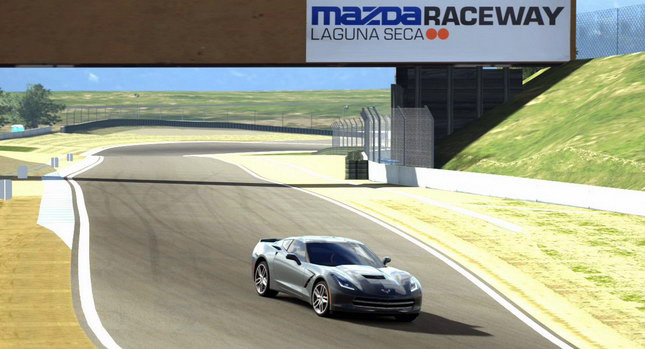
If those look look like blurry PS2 textures, it's because they are.
If you ever wondered how PC gamers felt when buying a late-generation console-to-PC port, Gran Turismo 5 gave you a taste.

How did a great series fall so far? I followed a bit of news here and there, and Yamauchi was constantly living a fantasy as a race car driver, spending huge quantities of time test driving exotic cars, taking the whole development team to retreats at race tracks, meeting with car companies to pretend he matters in the automotive world ("Vision GT" was his attempt to get auto manufacturers to treat him like a real car designer), and giving interviews rather than working on either GT5 or GT6.

Yamauchi hard at work not developing games in Paris.
He spent countless hours promoting his idiotic Vision GT idea, flying around the world to sit in automobile cockpits and lovingly caress their interiors (rather than, you know, obtaining CAD data), and fan his balls while blathering about how racing is "poetry" or something. Apparently the poem involves using other cars as billiard balls and not getting deducted points for running off the track or causing collisions, but whatever. Everything except actually producing content for GT was top priority for him, and it showed.

But I'm not here to just talk about Yamauchi. He's symptomatic of a wider problem in Japanese game development, the "game god." In Japan, lead developers who have been around since the cowboy days of console development are revered as infallible sages. Kazunori Yamauchi, Hironobu Sakaguchi, Shigeru Miyamoto, Hideo Kojima, and others are all examples of the game god problem. These guys all believe in their own myth and are obsessed with their own genius. Each fancies himself some kind of visionary artist savant whose talent goes far beyond merely making video games (Yamauchi fancies himself an elite car designer, Inafune thinks of him as a genius movie director, etc), and since he now has virtually free rein at the company he helped enrich with his earlier games, he inflicts increasingly absurd inanities on customers.

The cult of the game god is bringing down once-legendary game studios. Super Mario Galaxy 2 once again failed to win the audiences, Metal Gear Solid is a self-parody, Final Fantasy is embarrassing, and Gran Turismo is so lazy it makes Need for Speed look innovative.  For some reason, this doesn't happen as much in the USA. Maybe after the public debacles of 3D Realms and Ion Storm, everyone's extremely wary of giving too much freedom to any individual game developer. Maybe the way American corporate law works militates against that. Whatever the reason, Japanese game development is going to continue its downward slide until the cult of the game god gets purged.

Friday, July 31, 2015

5e's Deadly Druid

Finally, I'm getting a break from running the game and have a chance to actually play a 5e character! Naturally, I've drawn up a worthless hippie druid named Rolfe N'Dar who never bathes and considers the lives of trees to be more important than those of his comrades. You know, kind of an extension of myself. There are a lot of changes from 3rd edition, most of which make the character more fun to play.

In previous editions, the druid's most notable ability was Wild Shape, which allowed him to shape-shift into various beasts. However, he didn't get this ability until level 7 in 2nd edition or level 5 in 3rd. Further, he only had a small number of uses per day. In keeping with 5e's general philosophy of making every character fun, the druid gets Wild Shape right away, and it can be used twice per 1-hour rest. Strength is also not important for a 5e Druid, as there are a couple combat cantrips available that make us of WIS for the attack.

There are two paths for the Druid, Circle of the Moon and Circle of Nature (which has multiple subdomains). In online chatter, Circle of the Moon tends to be favored due to the more powerful Wild Shape forms available. I'm a maverick who plays by his own rules, so I chose Circle of Nature (forest). Also, it seemed more fitting for the N'Dar character to be a forest druid anyway. However, the Circle of Nature shouldn't be too quickly discounted, as it grants the ability to recharge a limited number of spell slots on a short rest and several extra prepped spells. It really comes down to whether you want to focus more on casting or your Wild Shape.

Monday, July 13, 2015

Call of Duty is Almost Done

Via this article on a meaningless petition, I happened across the interesting statistic that beginning with Black Ops II, each successive iteration of Call of Duty has seen double-digit decline in sales. That's huge!! Some of this is due no doubt to online sales (I bought Advanced Warfare on PSN), but Activision isn't crowing about beating any sales records, and Bobby Kotick isn't one to keep mum when business is good. All is proceeding as I have foreseen.

The problem with entertainment is people need novelty. A couple years ago, I predicted COD's relentless pace of annual releases would cause product fatigue in the market. The core issue isn't quality. COD continues to be the best shooter for your money. The problem is that as soon as a new game drops, the clock starts ticking. You've got twelve months to enjoy it before the next version hits and 70% of the people you play with move on to the next game. Unless you play every day, you're probably going to feel like you didn't get everything you wanted out of the game before it died.


Successful inter-generational franchises space out the releases far enough for each one to be a major event. Grand Theft Auto (a game I happen to loathe) might not have gross LTD sales as high as Call of Duty, but it's proven to be a much more stable source of revenue for Rockstar. Activision's getting ready to release the twelfth iteration of Call of Duty, no doubt to even greater apathy than Advanced Warfare met. Today's teenagers and college students, who are always the drivers of the FPS market, don't seem that excited by the game.


So far, every console generation has had a fun, accessible multiplayer shooter that blew up sales charts and ruled dorm rooms. It was Goldeneye back in the 1990s, Halo when I was in college, and Call of Duty more recently. It will be interesting to see if anyone can figure out how to capture that segment as everyone seems to be getting tired of the killstreaks and perks that defined COD.

5e Spell Cards

Like every edition of D&D before it, 5th edition has the annoying issue of looking up spells. Either you can look them up in the book ($25 on Amazon), which can be a little tedious, use a third-party app with a not-exactly-legal spell list, or buy spell cards. D&D Insider, which generated very nice character sheets at the exorbitant price of $75 a year, is no more, and its successor got killed off with no announcement of any plans to resurrect it. It seems that Wizards has given up almost entirely on making digital tools itself.

Anyway, the cards are okay. However, there aren't any duplicates, so don't plan on sharing. Amazon has recently slashed the price on a number of decks, so now might be a good time to order one for your character. I'm playing a Druid, and while $12 is pricey, it's money I don't expect to have to spend again.

Monday, July 6, 2015

5e is Clobbering Pathfinder on Amazon

Wizards has held its sales numbers pretty close to its chest, but Amazon can give some idea of who's hot and who's not. The Pathfinder core rulebook is currently ranked in the 3400s among all books on Amazon, while D&D's Player's Handbook is ranked at 68(!!!!!).


It's also worth noting that the 4e PHB has dropped to 28K, while the 3.5 PHB sits at 26K. I think it is fair to say that 4e is officially dead now. I certainly won't miss paying $75/yr so that my players can have the nice, printed sheets that the Character Builder provided. This handy tool estimates PF core book sales at ~150 per month, and D&D sales at ~1K per month.

I think this bodes well for the future of D&D, which has now resumed its place as the best-selling TTRPG. Pathfinder is a very well-supported product, but because it began life as a fresh coat of paint slapped on D&D 3.5, it has many of the same weaknesses and flaws as that system. The philosophy of "a mechanic for every situation" is a dead-end, and there's a good reason no new RPGs adopt it. 5e is a much fresher, more modern take on the classic game that strikes a good balance between depth and accessibility.

I think in another 10 years, we'll look at Pathfinder as a stopgap measure that existed to give D&D fans who didn't like 4e something to play while Wizards figured out how to take the game into the future.

Saturday, July 4, 2015

Understanding the Wii U's Failure

If you read too much game journalism and too many neogaf forum posts, you probably think Nintendo's current problems stem from not making the Wii powerful enough and "losing the hardcore." This is completely false. First, let's dispel a few myths about the Wii itself.


  1. Wii owners didn't buy games. This is, of course, completely false. The Wii's tie ratio was 8.8. This isn't record-breaking, but it's within normal historical bounds. Nintendo's highest-ever tie ratio for a home console was for the Gamecube, with a tie ratio of 9.6 . Its lowest was for the N64, with a tie ratio of of 6.8. 8.8 is pretty close to the NES tie ratio of 8.1. Notably, the Xbox 360 and PS2 each had a tie ratio over 10.
  2. Wii owners didn't buy sequels. The games that sold the Wii were Wii Sports, Wii Fit, Mario Kart Wii,  New Super Mario Bros Wii, and Wii Play. With the exception of the two Mario-themed games, which did not get sequels, the sales of the sequels to these games sold on par with the original releases, as seen on this list of best-selling Wii games.
  3. The Wii was a fad. The Wii consistently sold well from its launch in November 2006 through early 2010. That's too long to be a fad.
So what actually happened? If you look at the top of the list, you'll notice all the best-selling games (really, the system-selling games) were released before 2010. To understand what happened, let's break Wii games down into three categories:
  • New Market Games -- Straightforward, neutrally branded, family-friendly titles that can be played in short play sessions. Simplicity should not be confused with lack of polish. Includes games such as Wii Sports and Just Dance.
  • Old Market Games -- Games that focus on graphics, epic music and stories, and require a significant time investment to enjoy. Examples include the Legend of Zelda, Soul Calibur, and Call of Duty.
  • Shovelware -- Poor imitations of popular ideas that rely mainly on consumer ignorance. This includes everything from Ninjabread Man to Shellshock: Nam '67.
The New Market Games mostly sold very well. Nintendo was almost the sole developer of any real new NMGs, but there were a handful by other developers. There were some misfires, like Wii Music, but overall, this was a successful direction. Old Market Games, which the game media and forum posters focus on, tended to do poorly (the market for these titles was mainly on the HD consoles), and shovelware only had a brief spurt of popularity until the new market wised up to this trick. Third Parties tended to confuse the simplicity of Wii Sports with bad quality and couldn't figure out why their garbage didn't sell. This overall hurt everyone, as customers came to rely on Nintendo branding to sort out good from garbage. The Gamecube

What happened in 2010 was some kind of developer revolution at Nintendo. Nintendo basically stopped releasing NMGs at this point, the only one being Wii Party. Around this time, Shigeru Miyamoto, Eiji Aonuma, and Yoshio Sakamoto began speaking very openly about their personal visions for gaming and the direction they were going to lead the market. Essentially, they declared that now that the Wii was so successful, they were going to start producing the kinds of games that failed to sell the Gamecube. The idea seemed to be that the reasons games like Wind Waker and Super Mario Sunshine failed was that the Gamecube didn't sell well, not that the Gamecube failed to sell well because those games didn't excite the market. So what they dropped was the second-worst-selling 3D Mario game of all time, the worst-selling Metroid game of all time, and the second-worst-selling Zelda game of all time. Gamers don't want 3D Mario. No one cares about Sakamoto's inane storytelling. And Zelda players don't want feminine, cartoony games.

Don't believe me? Look at sales numbers. New Super Mario Bros is the second best-selling Mario games of all time, and the best-selling stand-alone title. Not only that, but it clearly cost less to make than Super Mario Galaxy. Any businessman with an ounce of sense would have ordered his employees to make a sequel to the first game rather than the second. However, Miyamoto is obsessed with 3D (he's behind the 3DS, greenlit the Virtual Boy, and why there were no 2D Mario games for almost 20 years). Essentially, he is convinced that his vision is the "correct" one, and the reason the market doesn't embrace 3D Mario is people haven't been properly educated.  As a result, Mario Galaxy 2 got a blowout budget and marketing campaign, while 2D Mario didn't happen again on the Wii (and the Wii U sequel was borderline shovelware).

That brings us to the Wii U. The Wii U is the capstone on Nintendo's rejection of New Market Games. The Wii controller was designed by a team of lower-ranked Nintendo engineers to address the problem of people not playing games due to the controller being too complicated. Miyamoto's contribution was the plug for attachments, which only ever got used by one thing. It's small, simple, not too expensive, and there are fun 4-player games for it. By contrast, the Wii U controller, which is entirely Miyamoto's "genius" idea, is basically the most complicated home console controller ever devised (okay, it gets the #2 slot), it's three times more expensive than a PS4 controller, and it consumes so many system resources that there's no way to use more than two of them. It is, in essence, a reprise of his totally failed GBA-Gamecube connectivity idea. 

That is why the Wii U is failing. It's not failing because people don't understand Miyamoto's brilliant controller idea. It's failing because he's got no business acumen, doesn't understand what people want from a controller, and seized the reins from the junior employees who had turned the company around.

Sunday, June 21, 2015

5e's Rust Monster

There's been a bit of whining in the D&D community that the Rust Monster just isn't scary enough any more. Here's a rundown of the differences:

  • 2nd Edition: Rust monster immediately corrodes things it touches, eats them. Magic things have a 10%-30% chance of not getting corroded.
  • 3rd Edition: Rust monster makes a +3 touch attack, corrodes things it touches, and eats them. It's a DC17 dex save to protect a magic item.
  • 4th Edition: Rust Monster has to hit first (or be hit) to trigger rusting, then can hit again with a bigger attack to destroy a rusting item. This is only a once-per-encounter attack for the lower-level specimens, and a recharging ability for the higher-level ones. Rusting is a cumulative, temporary penalty.
  • 5th Edition: Each time a Rust Monster touches or is touched by an item, it takes a cumulative, permanent penalty until it rusts away. Magic items are immune. 

Clearly, the worst of them all is the 2e Rust Monster, due to the generally lower scaling and scarcity of magic items. The 3rd edition version seems bad, but when you take into account Magic Mart and how rapidly the party's AC gets nearly out of reach, it's not too awful.

The Rust Monster is another iconic D&D monster, but this is in part because it's too awful. It's essentially a monster that your front-line fighters out entirely, unless you gave them time to change into leather gear, or room to escape and change. Basically, parties will do whatever they can to avoid them, which makes them not a very good monster to actually use.

In 5e, the scarcity of magic items is why they aren't affected. If you are running a campaign where you allow players to have easy access to magic items, I would strongly recommend modifying this trait. If you are playing 5e RAW, remember, your players might go a long time without ever seeing more than a few pieces of uncommon gear.

The cumulative damage bonus means players are more likely to fight them, and you can use them in groups without it being an overwhelming ruination of player gear. Players *might* decide to run and change, or they may just tough it out, drawing a backup weapon and using it until it dissolves. It's also a good time to use the Magic Weapon spell.

So it's true. The 5e Rust Monster is not as big a threat as in older editions. But in my experience running the game, that makes them a more usable enemy. They're still something that plate-wearing fighters will want to keep a healthy distance from.