Destiny was supposed to be THE big event that got people into the new generation of game consoles. I've heard from people in the know that the game, which cost $500m to make, is not hitting sales targets. No surprise; the game is awful.
1. The class system is boring. The whole point of an RPG-type structure is that as you level up, you get new capability. In Destiny, the main change is that you can use higher DPS weapons and wear stronger armor. But since the enemies are just the same things as before with higher DPS and stronger armor, who cares? The only thing differentiating one class from another is a slowly-recharging grenade and an even slower "super" ability. Most of the time is spent shooting the same enemies with the same four or five weapons over and over.
2. The loot is boring. Over the course of 8 levels, the only noticeable change I saw in the loot I got was that sometimes I found a gun that would unlock a red dot sight or higher damage as I used it more, or armor that would grant me more ammo reserves if I used it enough. No fireballs. No heat-seaking missiles. No infrared scopes. No cerebral bores. Just the same machine gun, but more DPS and a red dot. Whee.
3. The maps are boring. When I started the game and saw the first main location was Earth, I was thought, "Aw, cool, I get to explore the planet Earth! Next-gen is here!" Wrong. In Destiny, "Earth" means "An old cosmodrome in Russia." The end. You will not go to post-apocalyptic NYC. You will not go to a jungle island in the Pacific. You will not even go to other places in Russia. You get the one cosmodrome, and that's "Earth." The core game has only five maps like this, so you can forget about seeing much in the way of anything new or interesting. Also, going through the game means revisiting the same locations in these maps over...and over...and over. Compared to the scope of even last-gen games, it's pathetic.
4. The 'MMO' aspect is a joke. Most missions are only accessible to people you personally invite. There are a few with random match-making, so you can forget about encountering any kinds of guilds or groups online as you go through the game. Unless you play the competitive multiplayer, the game feels like a very, very boring take on Borderlands. You will occasionally see other players on the same map as you, running whatever quest they're doing. If you want to, you can silently help them kill some bad guys. You mostly won't want to.
5. The setting is incomprehensible. Imagine if in
Star Wars, Leia kept saying "The Death Star is very dangerous," but you never see it blow up Alderaan. In fact, no one even
mentions it can blow up planets. Or that it's a battle station. And it's
not called the "Death Star." It's called "Moribus Prime." So the story is that the
Rebellion is going to blow up Moribus Prime because "it's dangerous." Also, you never see anyone use the Force or even hear what the Force is. People just say "May the Force be with you" and "He is strong in the Force." There's no Darth Vader to personify the evil, either, just an undifferentiated mass of Storm Troopers who never speak or do anything except sit around, waiting for the Rebel Alliance to attack. Destiny is like that, only somehow even more confusing.
6. The crafting is unintuitive and tedious. The elements you find for crafting all have made-up sci-fi names, so you won't have any clue what they are. Since the things you can craft have equally obscure names and there are a bizarre number of elements and items, you'll probably just find yourself avoiding the crafting menus altogether. Crafting is generally a terrible idea in games, and Destiny just makes it extra terrible.
7. At low levels, the shops have nothing for you. Boy, my weapon is garbage. It's like five levels behind! I'll just go to the shop and...oh, they only sell gear for level 40 and above. Nevermind. Nevermind forever. I'll just go grind through a boss again and hope he drops something that isn't crap (P.S., the boss is going to drop crap).
Basically, Destiny is garbage. It was made by people who don't understand what makes games fun, what makes sci-fi interesting, or understand that "depth" doesn't mean "autistic levels of complexity." Stay away.
Wednesday, September 30, 2015

Saturday, September 19, 2015
Concentration Killed CoDzilla
Last game session, I noticed something about the Druid's combat spells...nearly every single one of them is tagged with Concentration. This is a new mechanic in 5e. You can only have one Concentration effect active at a time, and if you get hit while one is active, you have to make a Constitution saving throw with a DC equal to the damage you took.
The result of this is that the CoDzilla problem from 3rd edition is gone. In case you didn't know, in 3rd, you could make a god-like cleric by stacking the right buff spells and feats. Likewise, the "Batman" wizard (a wizard who can become any class by activating the right spells) is a thing of the past. 4e solved this by standardizing abilities, but at the cost of alienating a lot of fans and making too many classes feel too similar. In 5e, spells feel a lot more like their classic incarnations, but the addition of Concentration keeps things from getting out of hand. Also, only allowing one effect at a time makes the game simpler to run.
The result of this is that the CoDzilla problem from 3rd edition is gone. In case you didn't know, in 3rd, you could make a god-like cleric by stacking the right buff spells and feats. Likewise, the "Batman" wizard (a wizard who can become any class by activating the right spells) is a thing of the past. 4e solved this by standardizing abilities, but at the cost of alienating a lot of fans and making too many classes feel too similar. In 5e, spells feel a lot more like their classic incarnations, but the addition of Concentration keeps things from getting out of hand. Also, only allowing one effect at a time makes the game simpler to run.
Thursday, September 17, 2015
Grognards Are Terrible People
Something I only came to appreciate as an adult is that there's a wide gulf between a grown man with a past-time and a manchild whose life is his toys. There is a contingent of adults who are overly passionate about things like comic book plot continuity, the consistency of the fake science in Star Trek, obscure computations in RPGs, the DPS of various weapons in a video game, and so on. These people are almost invariably failures at life.
In D&D, there are a lot of these types. Come on, this is a hobby where public events have signs like, "We reserve the right to remove anyone from the premises who does not practice proper hygiene." I've learned to stay away from these types. Anyone who is going to get worked up about the lore for the Dire Wolf being totally wrong in some edition of D&D not only isn't going to be much fun in your party, he's also not going to be a decent person to be around.
In D&D, there are a lot of these types. Come on, this is a hobby where public events have signs like, "We reserve the right to remove anyone from the premises who does not practice proper hygiene." I've learned to stay away from these types. Anyone who is going to get worked up about the lore for the Dire Wolf being totally wrong in some edition of D&D not only isn't going to be much fun in your party, he's also not going to be a decent person to be around.
Friday, September 4, 2015
The 5e Druid Is Pretty Fun
I've now played the Druid a few times. Obviously, its offensive ability is fairly limited, but the ability to turn into virtually any animal I want is a blast. Need to scale a wall? Become a spider. Dive under the water? Become a shark or crocodile. Need a quick buffer of HP to get out of a jam in combat? Become a bear. 5e really throws the limits off transformations by having the power recharge every short rest.
The spells are also really solid. I can give everyone +10 to stealth checks. Goodberry is always a favorite (especially since I recharge 2 slots on a short rest). The animal-related spells are a bit tricky to grapple with, but I think with a little creativity, they should become plenty useful. DMs don't often think a lot about fauna, so I'm guessing I'll need to help mine along by asking what kinds of animals might be around.
It's certainly a lot better than the 4e Druid. Since most 4e spells were combat-oriented, taking animal form really crippled the character. I remember a friend of mine trying to play a druid in a 4e campaign I was running, and it just plain didn't work. It wasn't as bad as the summoner wizard he tried earlier, but still, it just wasn't much fun.
In 4e, your animal form was pure fluff. Basically, you had a set of abilities you could use in human form, and a set of abilities you could use in animal form. It fell into the trap a lot of classes in that edition did, where there were seemingly tons of powers you could mix and match, but you really needed to focus on one specific grouping to be any good. Either go with Beast Form abilities or stick strictly with human form abilities. Otherwise, you wind up with powers you almost never use. It also had that common issue of certain spells having such specific conditions attached to them that the right opportunity to use them never really came up.
5e doesn't have this issue, of course. The Druid has a fairly large selection of spells, and many of them can be used outside of combat. This particular druid isn't going the Circle of the Moon route, so I'm mostly playing as a humanoid caster who uses Wild Shape sparingly and mostly to get out of jams (like being pulled into the water by a merrow).
It's a good class.
The spells are also really solid. I can give everyone +10 to stealth checks. Goodberry is always a favorite (especially since I recharge 2 slots on a short rest). The animal-related spells are a bit tricky to grapple with, but I think with a little creativity, they should become plenty useful. DMs don't often think a lot about fauna, so I'm guessing I'll need to help mine along by asking what kinds of animals might be around.
It's certainly a lot better than the 4e Druid. Since most 4e spells were combat-oriented, taking animal form really crippled the character. I remember a friend of mine trying to play a druid in a 4e campaign I was running, and it just plain didn't work. It wasn't as bad as the summoner wizard he tried earlier, but still, it just wasn't much fun.
In 4e, your animal form was pure fluff. Basically, you had a set of abilities you could use in human form, and a set of abilities you could use in animal form. It fell into the trap a lot of classes in that edition did, where there were seemingly tons of powers you could mix and match, but you really needed to focus on one specific grouping to be any good. Either go with Beast Form abilities or stick strictly with human form abilities. Otherwise, you wind up with powers you almost never use. It also had that common issue of certain spells having such specific conditions attached to them that the right opportunity to use them never really came up.
5e doesn't have this issue, of course. The Druid has a fairly large selection of spells, and many of them can be used outside of combat. This particular druid isn't going the Circle of the Moon route, so I'm mostly playing as a humanoid caster who uses Wild Shape sparingly and mostly to get out of jams (like being pulled into the water by a merrow).
It's a good class.
Friday, August 14, 2015
Japan's Game Industry Is Committing Seppuku
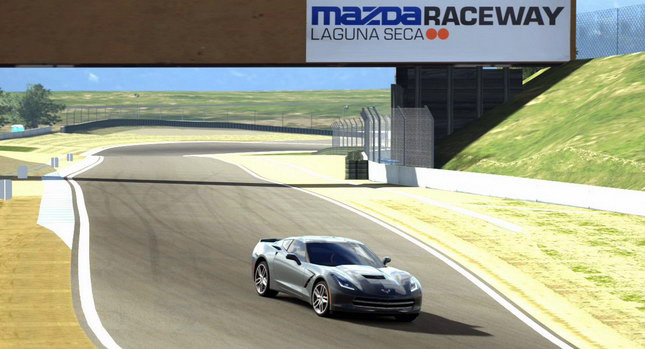
I recently made the mistake of trying to play Gran Turismo 6 again. For some reason, I had deluded myself into thinking it's a very good game that I've neglected. Of course, this is false. It's a terrible game that I put down because it's boring and repetitive.
If you haven't played GT5 or GT6, about 80% of the content (nearly 1000 of the ~1200 cars and a similar percentage of the tracks) are literally spruced-up PS2 and PSP content. I don't mean that the tracks and cars are repeats, I mean they are literally using the same geometry, sound files, and textures from earlier games and just processing them through a new rendering engine. Car upgrades are unrealistic (I didn't know a 1968 Shelby GT had an engine computer), customization options are limited mainly to paint color, and a huge portion of the cars are actually just slight variations of a handful of Nissan and Mitsubishi models that Kazunori Yamauchi is in love with. On top of that, the entire games consist of starting at the back of the back and having 3-5 laps to finish first.
If you ever wondered how PC gamers felt when buying a late-generation console-to-PC port, Gran Turismo 5 gave you a taste.
How did a great series fall so far? I followed a bit of news here and there, and Yamauchi was constantly living a fantasy as a race car driver, spending huge quantities of time test driving exotic cars, taking the whole development team to retreats at race tracks, meeting with car companies to pretend he matters in the automotive world ("Vision GT" was his attempt to get auto manufacturers to treat him like a real car designer), and giving interviews rather than working on either GT5 or GT6.
He spent countless hours promoting his idiotic Vision GT idea, flying around the world to sit in automobile cockpits and lovingly caress their interiors (rather than, you know, obtaining CAD data), and fan his balls while blathering about how racing is "poetry" or something. Apparently the poem involves using other cars as billiard balls and not getting deducted points for running off the track or causing collisions, but whatever. Everything except actually producing content for GT was top priority for him, and it showed.
But I'm not here to just talk about Yamauchi. He's symptomatic of a wider problem in Japanese game development, the "game god." In Japan, lead developers who have been around since the cowboy days of console development are revered as infallible sages. Kazunori Yamauchi, Hironobu Sakaguchi, Shigeru Miyamoto, Hideo Kojima, and others are all examples of the game god problem. These guys all believe in their own myth and are obsessed with their own genius. Each fancies himself some kind of visionary artist savant whose talent goes far beyond merely making video games (Yamauchi fancies himself an elite car designer, Inafune thinks of him as a genius movie director, etc), and since he now has virtually free rein at the company he helped enrich with his earlier games, he inflicts increasingly absurd inanities on customers.
The cult of the game god is bringing down once-legendary game studios. Super Mario Galaxy 2 once again failed to win the audiences, Metal Gear Solid is a self-parody, Final Fantasy is embarrassing, and Gran Turismo is so lazy it makes Need for Speed look innovative. For some reason, this doesn't happen as much in the USA. Maybe after the public debacles of 3D Realms and Ion Storm, everyone's extremely wary of giving too much freedom to any individual game developer. Maybe the way American corporate law works militates against that. Whatever the reason, Japanese game development is going to continue its downward slide until the cult of the game god gets purged.
If you haven't played GT5 or GT6, about 80% of the content (nearly 1000 of the ~1200 cars and a similar percentage of the tracks) are literally spruced-up PS2 and PSP content. I don't mean that the tracks and cars are repeats, I mean they are literally using the same geometry, sound files, and textures from earlier games and just processing them through a new rendering engine. Car upgrades are unrealistic (I didn't know a 1968 Shelby GT had an engine computer), customization options are limited mainly to paint color, and a huge portion of the cars are actually just slight variations of a handful of Nissan and Mitsubishi models that Kazunori Yamauchi is in love with. On top of that, the entire games consist of starting at the back of the back and having 3-5 laps to finish first.
 | |
| If those look look like blurry PS2 textures, it's because they are. |
How did a great series fall so far? I followed a bit of news here and there, and Yamauchi was constantly living a fantasy as a race car driver, spending huge quantities of time test driving exotic cars, taking the whole development team to retreats at race tracks, meeting with car companies to pretend he matters in the automotive world ("Vision GT" was his attempt to get auto manufacturers to treat him like a real car designer), and giving interviews rather than working on either GT5 or GT6.
 |
| Yamauchi hard at work not developing games in Paris. |
But I'm not here to just talk about Yamauchi. He's symptomatic of a wider problem in Japanese game development, the "game god." In Japan, lead developers who have been around since the cowboy days of console development are revered as infallible sages. Kazunori Yamauchi, Hironobu Sakaguchi, Shigeru Miyamoto, Hideo Kojima, and others are all examples of the game god problem. These guys all believe in their own myth and are obsessed with their own genius. Each fancies himself some kind of visionary artist savant whose talent goes far beyond merely making video games (Yamauchi fancies himself an elite car designer, Inafune thinks of him as a genius movie director, etc), and since he now has virtually free rein at the company he helped enrich with his earlier games, he inflicts increasingly absurd inanities on customers.
The cult of the game god is bringing down once-legendary game studios. Super Mario Galaxy 2 once again failed to win the audiences, Metal Gear Solid is a self-parody, Final Fantasy is embarrassing, and Gran Turismo is so lazy it makes Need for Speed look innovative. For some reason, this doesn't happen as much in the USA. Maybe after the public debacles of 3D Realms and Ion Storm, everyone's extremely wary of giving too much freedom to any individual game developer. Maybe the way American corporate law works militates against that. Whatever the reason, Japanese game development is going to continue its downward slide until the cult of the game god gets purged.
Friday, July 31, 2015
5e's Deadly Druid
Finally, I'm getting a break from running the game and have a chance to actually play a 5e character! Naturally, I've drawn up a worthless hippie druid named Rolfe N'Dar who never bathes and considers the lives of trees to be more important than those of his comrades. You know, kind of an extension of myself. There are a lot of changes from 3rd edition, most of which make the character more fun to play.
In previous editions, the druid's most notable ability was Wild Shape, which allowed him to shape-shift into various beasts. However, he didn't get this ability until level 7 in 2nd edition or level 5 in 3rd. Further, he only had a small number of uses per day. In keeping with 5e's general philosophy of making every character fun, the druid gets Wild Shape right away, and it can be used twice per 1-hour rest. Strength is also not important for a 5e Druid, as there are a couple combat cantrips available that make us of WIS for the attack.
There are two paths for the Druid, Circle of the Moon and Circle of Nature (which has multiple subdomains). In online chatter, Circle of the Moon tends to be favored due to the more powerful Wild Shape forms available. I'm a maverick who plays by his own rules, so I chose Circle of Nature (forest). Also, it seemed more fitting for the N'Dar character to be a forest druid anyway. However, the Circle of Nature shouldn't be too quickly discounted, as it grants the ability to recharge a limited number of spell slots on a short rest and several extra prepped spells. It really comes down to whether you want to focus more on casting or your Wild Shape.
In previous editions, the druid's most notable ability was Wild Shape, which allowed him to shape-shift into various beasts. However, he didn't get this ability until level 7 in 2nd edition or level 5 in 3rd. Further, he only had a small number of uses per day. In keeping with 5e's general philosophy of making every character fun, the druid gets Wild Shape right away, and it can be used twice per 1-hour rest. Strength is also not important for a 5e Druid, as there are a couple combat cantrips available that make us of WIS for the attack.
There are two paths for the Druid, Circle of the Moon and Circle of Nature (which has multiple subdomains). In online chatter, Circle of the Moon tends to be favored due to the more powerful Wild Shape forms available. I'm a maverick who plays by his own rules, so I chose Circle of Nature (forest). Also, it seemed more fitting for the N'Dar character to be a forest druid anyway. However, the Circle of Nature shouldn't be too quickly discounted, as it grants the ability to recharge a limited number of spell slots on a short rest and several extra prepped spells. It really comes down to whether you want to focus more on casting or your Wild Shape.
Monday, July 13, 2015
Call of Duty is Almost Done
Via this article on a meaningless petition, I happened across the interesting statistic that beginning with Black Ops II, each successive iteration of Call of Duty has seen double-digit decline in sales. That's huge!! Some of this is due no doubt to online sales (I bought Advanced Warfare on PSN), but Activision isn't crowing about beating any sales records, and Bobby Kotick isn't one to keep mum when business is good. All is proceeding as I have foreseen.
The problem with entertainment is people need novelty. A couple years ago, I predicted COD's relentless pace of annual releases would cause product fatigue in the market. The core issue isn't quality. COD continues to be the best shooter for your money. The problem is that as soon as a new game drops, the clock starts ticking. You've got twelve months to enjoy it before the next version hits and 70% of the people you play with move on to the next game. Unless you play every day, you're probably going to feel like you didn't get everything you wanted out of the game before it died.
Successful inter-generational franchises space out the releases far enough for each one to be a major event. Grand Theft Auto (a game I happen to loathe) might not have gross LTD sales as high as Call of Duty, but it's proven to be a much more stable source of revenue for Rockstar. Activision's getting ready to release the twelfth iteration of Call of Duty, no doubt to even greater apathy than Advanced Warfare met. Today's teenagers and college students, who are always the drivers of the FPS market, don't seem that excited by the game.
So far, every console generation has had a fun, accessible multiplayer shooter that blew up sales charts and ruled dorm rooms. It was Goldeneye back in the 1990s, Halo when I was in college, and Call of Duty more recently. It will be interesting to see if anyone can figure out how to capture that segment as everyone seems to be getting tired of the killstreaks and perks that defined COD.
The problem with entertainment is people need novelty. A couple years ago, I predicted COD's relentless pace of annual releases would cause product fatigue in the market. The core issue isn't quality. COD continues to be the best shooter for your money. The problem is that as soon as a new game drops, the clock starts ticking. You've got twelve months to enjoy it before the next version hits and 70% of the people you play with move on to the next game. Unless you play every day, you're probably going to feel like you didn't get everything you wanted out of the game before it died.
Successful inter-generational franchises space out the releases far enough for each one to be a major event. Grand Theft Auto (a game I happen to loathe) might not have gross LTD sales as high as Call of Duty, but it's proven to be a much more stable source of revenue for Rockstar. Activision's getting ready to release the twelfth iteration of Call of Duty, no doubt to even greater apathy than Advanced Warfare met. Today's teenagers and college students, who are always the drivers of the FPS market, don't seem that excited by the game.
So far, every console generation has had a fun, accessible multiplayer shooter that blew up sales charts and ruled dorm rooms. It was Goldeneye back in the 1990s, Halo when I was in college, and Call of Duty more recently. It will be interesting to see if anyone can figure out how to capture that segment as everyone seems to be getting tired of the killstreaks and perks that defined COD.
Subscribe to:
Posts (Atom)